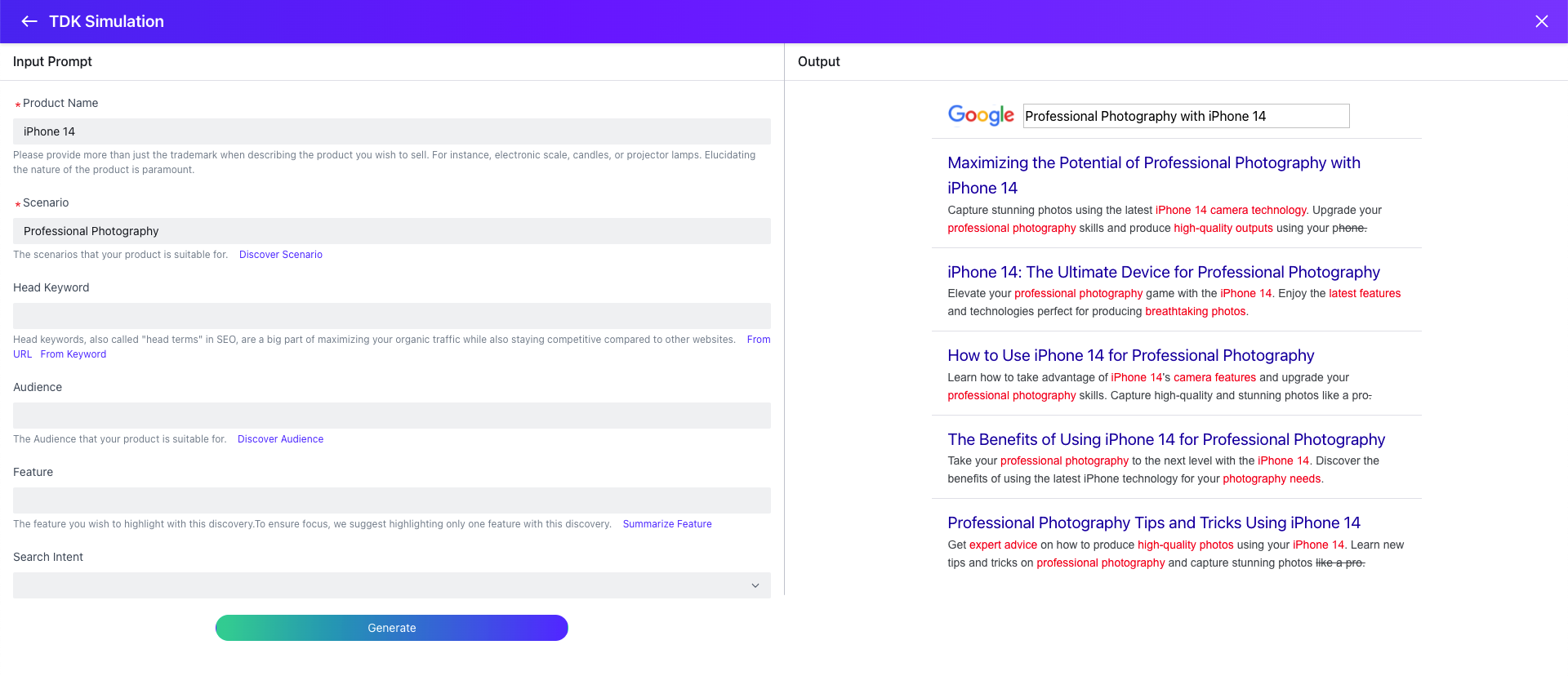
Generating Title Description Keywords for Product Names
Introduction
In today's digital age, having a strong online presence is crucial for any business to remain competitive. One of the most important aspects of that online presence is search engine visibility. When potential customers are searching for products or services in your industry, you want your website and products to appear at the top of their search results. This is where generating TDK (Title, Description, Keyword) for product names comes into play. By creating targeted and optimized TDKs for each individual product on your website, you increase the chances of those products appearing higher in search engine rankings and ultimately being seen by more potential customers. In this blog post, we will delve deeper into the importance of generating TDKs for product names and provide tips on how to do so effectively. Understanding TDK
When it comes to optimizing product names for search engines, TDK plays a crucial role. TDK stands for Title, Description, and Keywords - the three elements that make up the metadata of a webpage. The title tag appears in the browser tab and is also used by search engines as one of their primary ranking factors. It should accurately describe what the page is about while incorporating relevant keywords. The meta description provides a brief summary of the content on a webpage and is often displayed underneath the title tag in search engine results pages (SERPs). While it doesn't directly affect rankings, an engaging and informative meta description can entice users to click through to your website. Finally, there are keyword tags which were once considered essential but have since lost much of their importance due to abuse by spammers. In order to improve visibility for product names in SERPs, businesses must ensure their TDK accurately reflects what their products offer while incorporating relevant keywords without overstuffing them into every available field. By providing clear information about each product within these three elements, companies can help both customers and search engines understand more about what they're offering - ultimately resulting in higher rankings and increased traffic from interested buyers looking specifically for those goods or services online. Choosing the Right Product Name
When it comes to choosing a product name, there are several factors that you should consider in order to ensure that it is both SEO-friendly and relevant to your target audience.
Include Relevant Keywords
One of the most important aspects of choosing a product name is including relevant keywords. This will help your product rank higher in search engine results pages (SERPs) for queries related to those keywords. When selecting keywords, think about what words or phrases your potential customers might use when searching for a product like yours. Conducting keyword research can be helpful in identifying these terms. However, it's important not to overdo it with keyword stuffing – using too many keywords can make your product name sound unnatural and spammy. Instead, aim for a balance between incorporating relevant keywords and creating an engaging and memorable product name.
Consider Your Target Audience
Another crucial factor in choosing a successful product name is considering your target audience. Your product's name should resonate with the people who are most likely to purchase it. Think about their demographics, interests, values, and pain points – all of these factors can influence how they respond to different types of names.
For example, if you're selling vegan protein powder aimed at health-conscious millennials, you may want to choose a trendy-sounding name that emphasizes its plant-based ingredients and ethical sourcing practices. On the other hand, if you're marketing an industrial cleaning solution targeted towards B2B clients, using industry-specific jargon could help establish credibility and expertise.
Ultimately, by taking into account both SEO considerations like relevant keywords as well as understanding your target audience when naming products will increase visibility on search engines while simultaneously resonating with potential buyers leading them down the sales funnel towards completing purchases.
Creating an SEO-Optimized Title
When creating a title for your product, it is important to keep in mind the keywords that are relevant to your target audience. These keywords should be incorporated into the title to ensure that search engines can easily identify and categorize your product. However, it is equally important not to sacrifice readability or appeal in favor of keyword stuffing. A good practice is to create a catchy and attention-grabbing headline while still incorporating relevant keywords. To achieve this, start with identifying the most essential keyword phrases for your product and its features using tools like Google's Keyword Planner or SEMrush's Keyword Research Tool. Then use these phrases in combination with power words such as "new," "best," "proven," etc., which help convey value proposition and uniqueness of the product.
It is also crucial to consider what language resonates with your target audience when crafting titles. For example, if you are targeting tech-savvy millennials, then using creative jargon may work well; on the other hand, if you're targeting seniors who want better healthcare products then focusing on conveying trustworthiness through simple yet effective language would be more appropriate.
In summary, an SEO-optimized title incorporates relevant keywords while still being appealing and captivating for potential customers. Using tools like Keyword Planner can help identify specific phrases but always prioritize what resonates best with your target audience over strict optimization strategies alone. Crafting an Effective Description
Guidelines for Writing a Compelling Description
Crafting an effective description is crucial to attract potential customers and encourage clicks. When writing a product description, it's essential to include relevant keywords that describe the product accurately. However, stuffing the description with too many keywords can negatively impact the user experience and harm your search engine ranking. Therefore, focus on using keywords naturally in your sentence structure. A compelling product description should also highlight unique features or benefits of your product that differentiate it from competitors' products. It should provide valuable information about how the product can solve customer problems or improve their lives.
To make descriptions more appealing to consumers, use persuasive language that encourages them to take action. For example, using phrases like "limited time offer" or "while stocks last" motivate users to act quickly.
Additionally, formatting is important when writing descriptions. Break up text into smaller paragraphs and bullet points so readers can scan through easily and find what they need quickly.
In summary, crafting an effective description requires including relevant keywords naturally while highlighting unique features/benefits of your product while providing valuable information about how it solves customer problems/improves their lives. Using persuasive language that motivates customers coupled with proper formatting makes for a compelling piece of content that encourages clicks by potential customers leading to increased visibility in search engines.
Conclusion
In conclusion, generating TDK for product names is a crucial step in improving the visibility of products on search engines. By including relevant and targeted keywords in the title, description, and keywords sections of your product page, you can help potential customers find your products more easily. Remember to keep these elements up-to-date and relevant to ensure continued success. As a business owner or marketer looking to improve your product's visibility online, taking the time to generate effective TDK should not be overlooked. Start implementing this strategy today to see improved results in search engine rankings and ultimately increase sales.